Custom Framing Collectible Posters - Jazz Fest
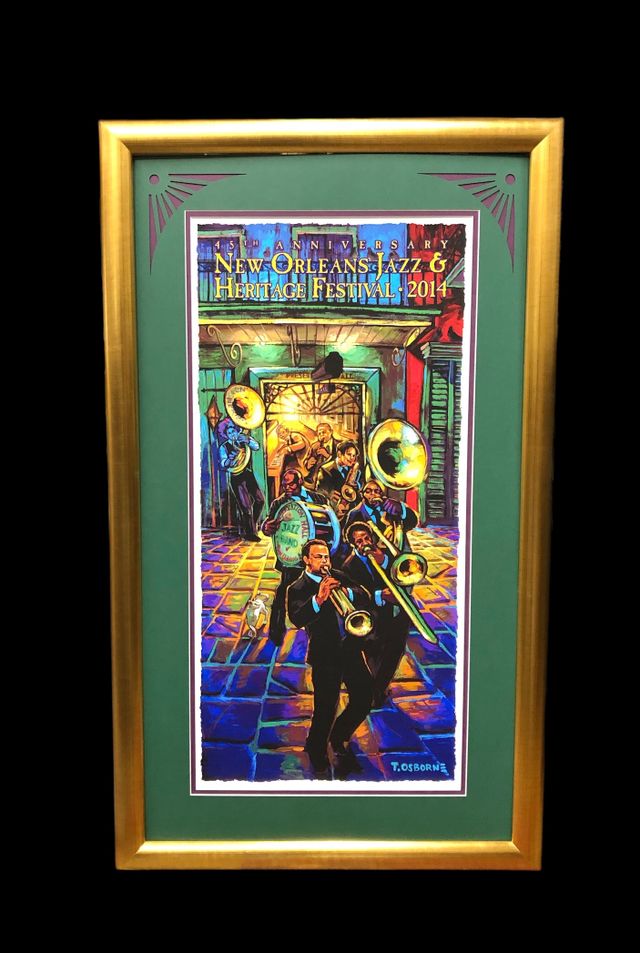
Do You Know What You're Getting When Buying a Collectible Poster Already Framed?
Collectible posters are more than decoration. They’re investments, cultural artifacts, and often deeply personal pieces. Yet one of the most overlooked factors in preserving their value isn’t the poster itself—it’s how it’s framed.
The Hidden Risk of “Good Enough” Framing
It’s easy to assume that all frames serve the same purpose: make the poster look nice and hang it on the wall. Big-box stores, budget framing services, and even some custom shops offer quick, inexpensive options that seem perfectly fine at first glance. But beneath the surface, many of these frames use materials that can quietly damage your poster over time or just don't offer the level of protection they should.
Common issues include:
- Backing boards and Matboards are not created equal. Don't be fooled by "acid-free" labels. Acid free boards can still contain lignins, which over time can cause discoloration and spotting.
- Non-UV-protective glass or acrylic that allows fading from light exposure. Again, there are multiple "grades" of UV filtering glazing products on the market.
- Permanent adhesives that stain or warp the paper
- Poor sealing that exposes the piece to humidity, dust, and pollutants
These aren’t just cosmetic concerns. Once damage occurs, it’s often irreversible—and it can significantly reduce both the aesthetic and monetary value of your poster.
What Makes Conservation (or Museum-Grade) Framing Different?
Custom framing done with conservation or museum-grade materials is specifically designed to preserve artwork for the long term. This isn’t about luxury—it’s about protection.
Key elements include:
1. Acid-Free AND Lignin-Free Materials
On a valuable collectible, don't settle for less than 100% cotton rag matboards. 100% cotton rag matboards represent the highest standard in archival framing, made entirely from purified cotton fibers that are naturally acid-free, lignin-free, and exceptionally stable over time. They offer superior longevity and are the preferred choice for museum and conservation work because they resist deterioration and won’t contribute to the aging of the artwork. Acid-free buffered matboards, while still a significant step above standard paper mats (and are considered conservation quality), are typically made from wood pulp that has been chemically treated to neutralize acids and include an alkaline buffer to slow future acid formation. While suitable for many framing projects, they don’t match the long-term stability and durability of cotton rag boards, especially for highly valuable or irreplaceable pieces.
2. UV-Filtering Glazing
Museum-grade glass or acrylic can block up to 99% of harmful UV rays, dramatically helping to slow fading and color degradation. Lower grades of UV filtering glazing are available but don't provide the long-term protection of Museum grade glass or acrylic.
3. Reversible Mounting Techniques
Instead of gluing, taping, or permanently fixing the poster, professional framers use archival methods like conservation paper hinges. This ensures the poster can be removed later without damage.
4. Framing Environments
A properly constructed framing package does more than display artwork—it creates a protective environment that prevents long-term damage. One of the most important principles is ensuring the artwork never comes into direct contact with the glazing, as this can lead to moisture buildup, sticking, or surface damage over time. Using mats or spacers creates necessary air circulation and separation. Additionally, proper sealing with backing boards and dust covers helps protect against pollutants and pests. Together, these techniques help preserve both the condition and value of the piece.
The Value Equation: Cost vs. Preservation
Custom conservation framing does cost more upfront—sometimes significantly more than off-the-shelf options. But it’s important to think in terms of long-term value.
A rare or limited-edition poster that fades, yellows, or becomes brittle can lose a substantial portion of its worth. In some cases, improper framing can reduce a collectible’s value by more than the cost of proper framing would have been in the first place.
In contrast, a well-preserved poster maintains:
- Color integrity
- Structural condition
- Collector appeal
- Resale value
Peace of Mind vs. Uncertainty
When you choose custom framing with museum grade materials, you’re not just paying for craftsmanship—you’re paying for certainty. You know exactly what materials are being used, how your poster is being handled, and that it’s protected according to industry best practices.
With cheaper alternatives, there’s often little transparency. Materials may not be labeled clearly, and staff may not be trained in preservation techniques. The result is a gamble—one that can quietly cost you over time.
When Is Conservation Framing Worth It?
Not every poster needs museum-grade treatment. But it’s strongly recommended if your piece is:
- Rare, vintage, or limited edition
- Signed or authenticated
- Financially valuable or expected to appreciate
- Personally irreplaceable
For lower-value or easily replaceable posters, a basic frame might suffice—but even then, avoiding clearly harmful materials is still wise.
Final Thoughts
Custom framing with museum grade materials isn’t just about presentation—it’s about stewardship. Whether your poster is worth hundreds or thousands of dollars, proper framing ensures it remains as vibrant and intact as the day you acquired it.
Cutting corners on framing might save money today, but it can quietly erode the very thing that makes your poster special. When it comes to collectibles, preservation isn’t an upgrade—it’s part of the investment.